
Dryers are essential household appliances, but when they stop working properly, it can cause major inconveniences. Many common dryer issues can be resolved with a bit of knowledge and some basic tools. This guide will walk you through diagnosing and repairing common problems with your dryer, helping you get it back up and running in no time.
Introduction to Dryer Repair
Repairing a dryer doesn’t always require a professional. Whether your dryer won’t turn on, isn’t heating, or is making unusual noises, many problems can be fixed with simple troubleshooting techniques.
Common Dryer Issues That Need Repair
Before diving into repairs, it’s essential to identify the problem. Here are some of the most common dryer issues:
- Dryer Won’t Start: This could be due to electrical issues, a faulty start switch, or a blown thermal fuse.
- No Heat: When a dryer runs but doesn’t produce heat, it’s usually due to a faulty heating element, thermostat, or thermal fuse.
- Excessive Noise: Loud thumping or squealing sounds often indicate worn-out drum rollers, a defective belt, or a broken idler pulley.
- Clothes Take Too Long to Dry: This can happen if the vent is clogged or if the heating element isn’t functioning properly.
- Dryer Shuts Off Mid-Cycle: Overheating, a faulty motor, or a malfunctioning door switch can cause this issue.
Diagnosing the Problem
Before attempting any repair, diagnosing the issue is crucial. Follow these steps to identify the cause:
- Check the Power Supply: Ensure the dryer is plugged in and that the circuit breaker hasn’t tripped.
- Inspect the Door Switch: If the dryer doesn’t start when the door is closed, the door switch could be faulty. You’ll need to test it with a multimeter to check for continuity.
- Test the Start Switch: If the dryer doesn’t respond when pressing the start button, the start switch may need to be replaced.
- Examine the Thermal Fuse: A blown thermal fuse can prevent the dryer from turning on or heating up. You can check it with a multimeter.
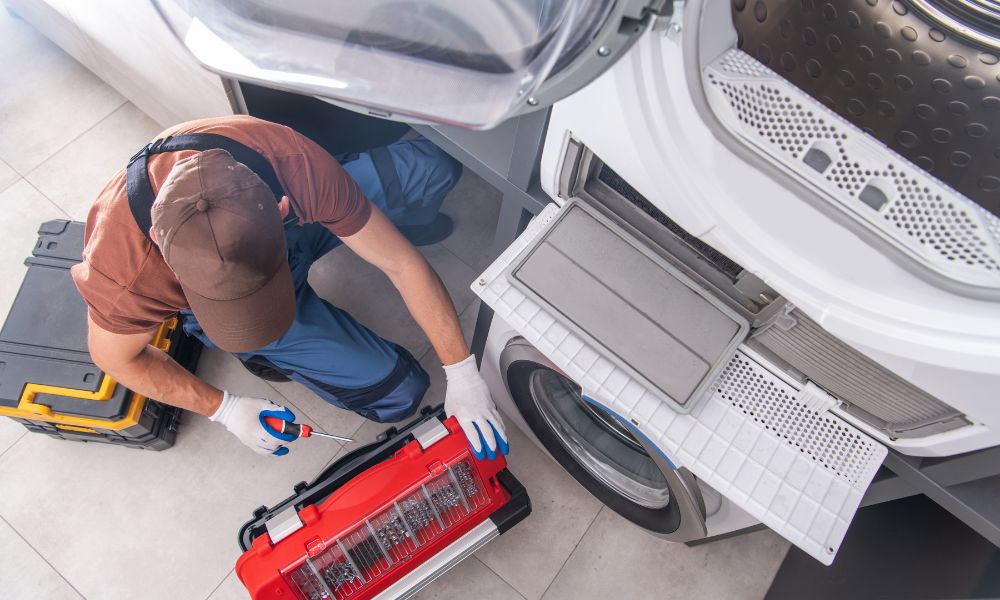
How to Repair a Dryer That Won’t Start
A dryer that won’t start is often caused by electrical problems, a faulty start switch, or a blown thermal fuse. Here’s how to fix it:
- Check the Power Supply: First, make sure the dryer is plugged in and the outlet is working.
- Test the Door Switch: Open and close the dryer door. If the dryer doesn’t respond when the door is closed, the door switch may be faulty. Use a multimeter to check for continuity and replace it if necessary.
- Replace the Start Switch: If the start button isn’t working, test the start switch with a multimeter. If it doesn’t show continuity, replace the switch.
How to Fix a Dryer That Isn’t Heating
When your dryer isn’t producing heat, it’s likely due to a faulty heating element, thermostat, or thermal fuse. Here’s how to troubleshoot and fix it:
- Check the Heating Element: Unplug the dryer and access the heating element. Test it with a multimeter for continuity. If the element is faulty, replace it.
- Test the Thermal Fuse: A blown thermal fuse can prevent the dryer from heating. Use a multimeter to check for continuity and replace it if it’s blown.
- Inspect the Thermostat: The thermostat regulates the dryer’s temperature. Test it for continuity and replace it if necessary.
How to Fix a Noisy Dryer
If your dryer is making unusual noises, the problem is often due to worn-out parts like the drum rollers, belt, or idler pulley.
- Replace the Drum Rollers: Worn-out drum rollers can cause a thumping noise. To replace them, remove the drum and install new rollers.
- Check the Belt: A defective belt can make a squealing sound. Inspect the belt for signs of wear and replace it if necessary.
- Replace the Idler Pulley: The idler pulley maintains tension on the dryer belt. If it’s broken or worn out, replace it to stop the noise.
How to Clean the Dryer Vent
A clogged vent can cause the dryer to overheat or take too long to dry clothes. Cleaning the vent regularly helps maintain optimal performance.
- Disconnect the Dryer: Unplug the dryer and move it away from the wall.
- Clean the Vent Hose: Use a vent cleaning brush or vacuum to remove lint buildup from the vent hose.
- Clean the Exterior Vent: Make sure the exterior vent is clear of debris and allows proper airflow.
How to Fix a Dryer That Shuts Off Mid-Cycle
A dryer that shuts off during a cycle could be overheating or have a faulty motor. Follow these steps to fix it:
- Check for Overheating: If the dryer is overheating, it will automatically shut off to prevent damage. Make sure the vent is clear, and the airflow is unobstructed.
- Test the Motor: A faulty motor can cause the dryer to stop mid-cycle. Use a multimeter to test the motor, and replace it if it’s not functioning correctly.
How to Replace a Dryer Belt
The dryer belt is responsible for rotating the drum. If the belt breaks, the dryer won’t turn. Here’s how to replace it:
- Unplug the Dryer: Safety first! Always disconnect the dryer from the power source.
- Access the Drum: Remove the front or back panel of the dryer to access the drum and belt.
- Remove the Old Belt: Detach the old belt from the drum and pulleys.
- Install the New Belt: Loop the new belt around the drum and pulleys, making sure it’s tight and properly aligned.
How to Replace the Dryer’s Thermal Fuse
The thermal fuse is a safety device that cuts off the dryer’s heating element if it overheats. If the fuse blows, the dryer won’t heat. Here’s how to replace it:
- Unplug the Dryer: Always disconnect the dryer before performing repairs.
- Locate the Thermal Fuse: The fuse is usually located on the blower housing or near the heating element.
- Test the Fuse: Use a multimeter to check for continuity. If the fuse is blown, replace it with a new one.
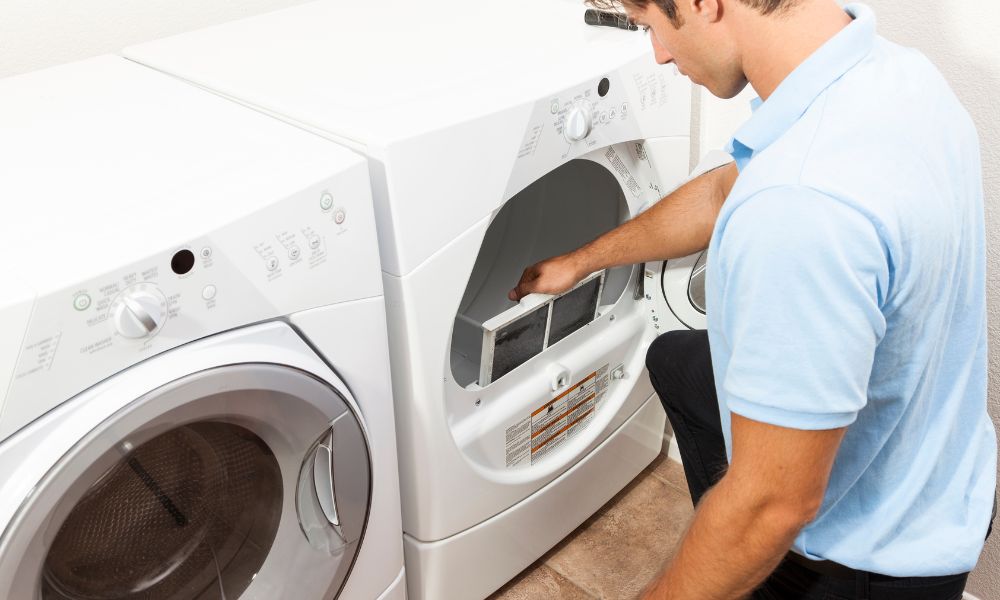
Regular Maintenance to Prevent Future Problems
Regular maintenance can extend the life of your dryer and prevent costly repairs. Here are some tips:
- Clean the Lint Filter: Clean the lint filter after every use to improve efficiency and prevent overheating.
- Inspect the Vent System: Check the vent system regularly for lint buildup and blockages. Clean the vent hose and exterior vent at least once a year.
- Check the Drum Seals: Inspect the drum seals for signs of wear and replace them if they’re damaged.
When to Call a Professional
While many dryer repairs can be done at home, some issues require professional expertise. If you’re dealing with electrical problems, a faulty motor, or if you’re unsure about a repair, it’s best to call a professional technician.
FAQ Section
Q1: Why isn’t my dryer starting?
A1: The most common reasons include a faulty power supply, a blown thermal fuse, or a defective start switch. Check the power source and test the start switch and fuse.
Q2: What should I do if my dryer is not heating?
A2: If your dryer isn’t heating, it could be due to a faulty heating element, thermal fuse, or thermostat. Test these components with a multimeter and replace them if necessary.
Q3: Why is my dryer making loud noises?
A3: Loud noises usually indicate worn-out drum rollers, a broken belt, or a faulty idler pulley. Inspect these parts and replace them if needed.
Q4: How often should I clean the dryer vent?
A4: It’s recommended to clean the dryer vent every 6-12 months to prevent lint buildup and maintain optimal airflow.
Q5: Can I replace the dryer belt myself?
A5: Yes, replacing the dryer belt is a relatively simple repair that most homeowners can do with basic tools. Follow the steps outlined in this guide.
Q6: Why does my dryer shut off mid-cycle?
A6: A dryer may shut off mid-cycle due to overheating, a clogged vent, or a faulty motor. Make sure the vent is clear and test the motor for issues.
Conclusion
Repairing a dryer can seem daunting, but many common issues are easy to fix with a bit of troubleshooting and the right tools. Whether your dryer won’t start, isn’t heating, or is making loud noises, this guide provides the steps to diagnose and resolve the problem. Regular maintenance, like cleaning the lint filter and vent system, can help prevent these issues and extend the life of your dryer.
